Laine
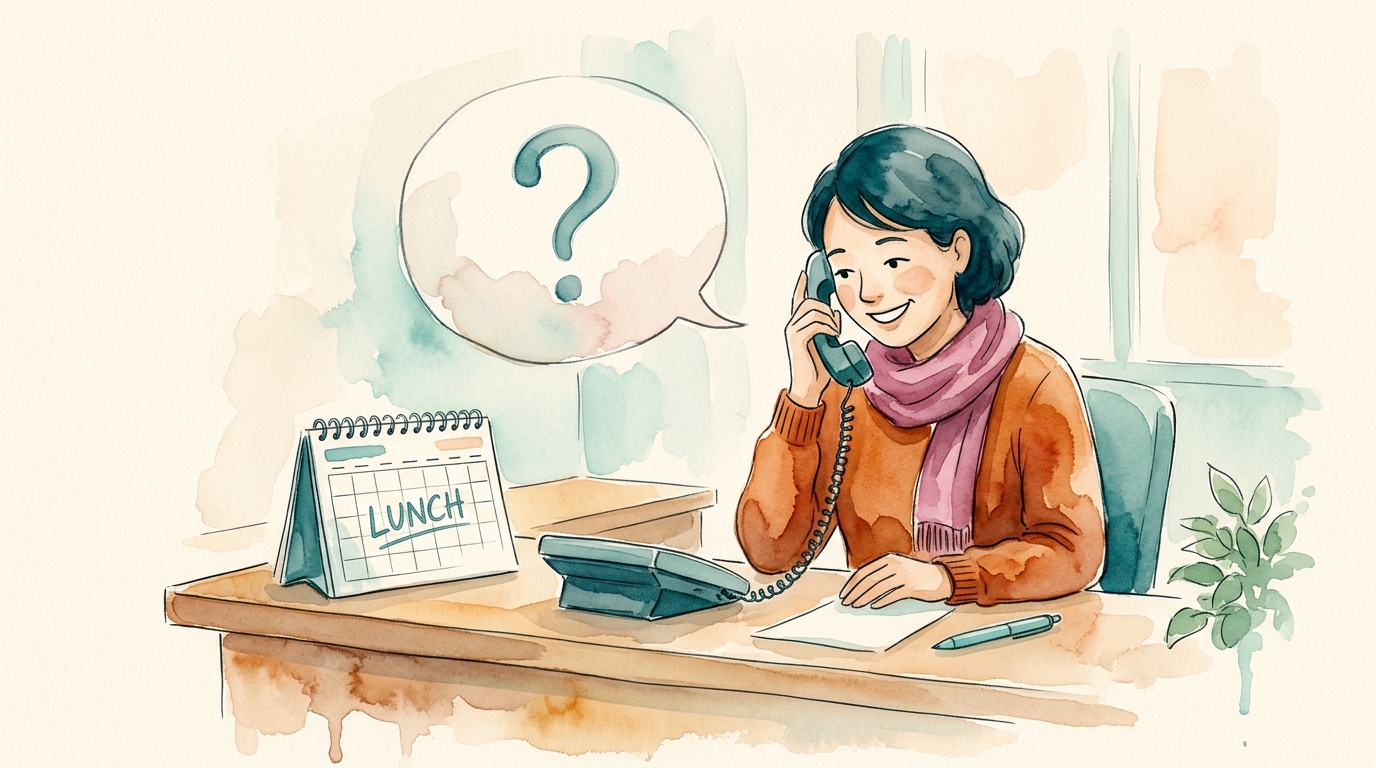
The Greeting That Lies
"We are currently assisting other patients" plays in a great many dental offices in the middle of lunch, to a caller who can hear that nobody is. "Our office is closed" plays to an open office because the after-hours recording is the only one the phone system has. The ADA's standard greeting carries four things and says nothing about a recorded message. What a true lunch greeting says, why an office that keeps its phone open needs a third recording, who changes the greeting when the hours change, and the simplest test there is: call your own number and listen.
November 18, 2026 · 6 min read
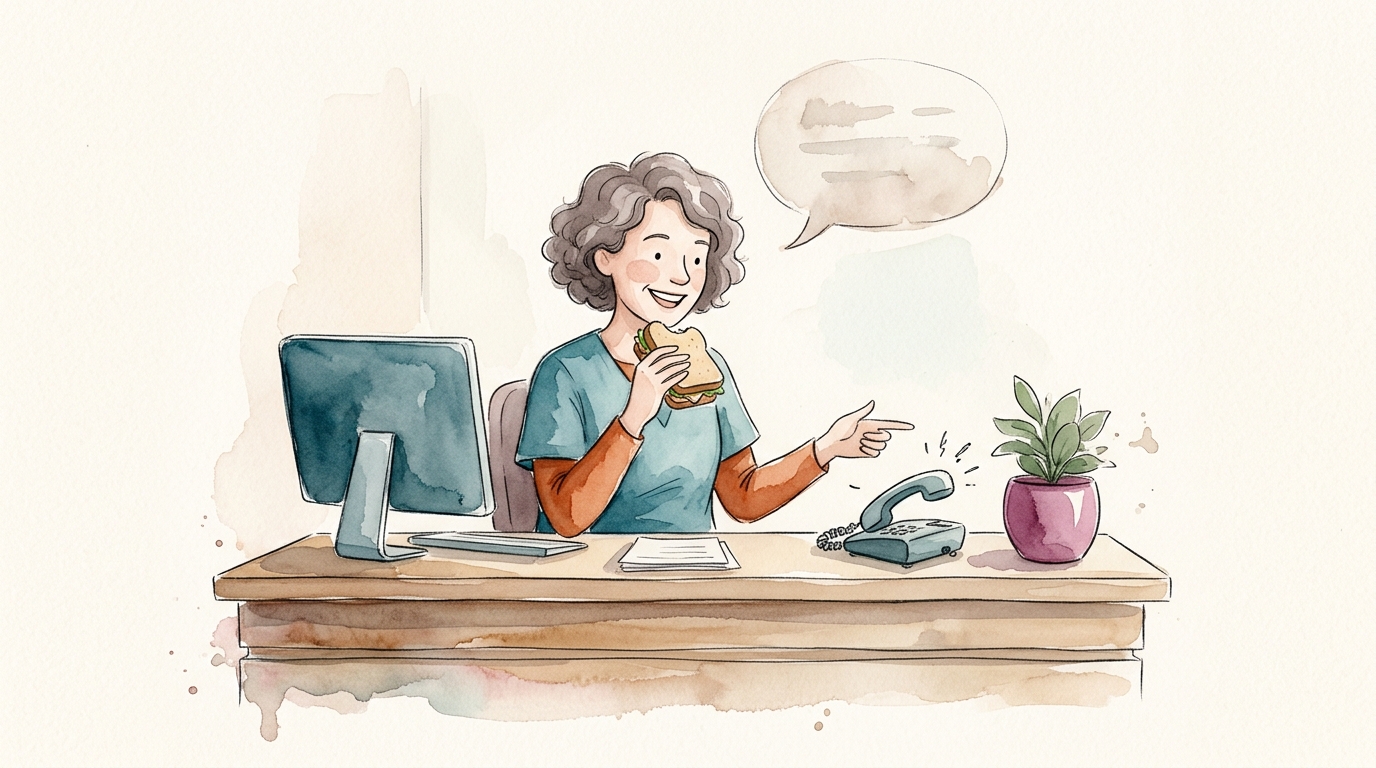
Lunch Is a Decision
Your employee policy manual has a page about lunch and a page about office hours, and nowhere between them is a sentence about the phone. So the phone over lunch is handled by whoever is nearest, which some days is the coordinator eating at her desk and some days is nobody. The ADA says to match your hours to when patients can reach you; a federal rule says an employee required to eat at her desk is working; your call log says how many people tried. Lunch is a decision. Write it down.
November 4, 2026 · 7 min read
Abandoned Is Not Missed
A patient says she hung up without leaving a message. Ask five phone systems what that call was and you get a missed call, an abandoned call, both at once, or a call in a category of its own. None of them is wrong. That is why every "practices miss this many calls" figure is one vendor's customers under one vendor's definition, and why the first job is reading your own system's sentence.
October 30, 2026 · 6 min read
The Voicemail You Leave
The email asking whether your voicemail is HIPAA compliant wants you to buy something. The federal answer has been public since 2002, and it fits on an index card: yes, leave the message, and limit it to your name, your number, enough to say which appointment, and a request to call back. The same answer covers the husband who picks up and the patient who asked you not to call the house. The rest is a sentence the doctor writes once.
October 28, 2026 · 6 min read
The Caller Who Tried Twice
"We must have been on the other line" is a guess, and patients can hear it. Once the scheduling coordinator has looked at the call log, she can say what actually happened, ask what the call was about, and find everyone else who tried twice and never made it to the counter.
October 14, 2026 · 5 min read
Reading Your Own Call Log
"I called earlier and nobody picked up." The front desk apologizes and guesses. The phone system knows: it wrote a row for that call the moment it came in. This post walks through a call log column by column, shows why the word "missed" means something different in each phone system, and says what a row will never tell you.
October 7, 2026 · 6 min read
What a Trial Is Actually For
The email says your trial ends tomorrow. In a lot of practices nobody can say whether anyone used it, because nobody decided at the start that this was the thing to find out. A trial is not for confirming you like a product. It is for finding out whether your team will use it before the money is spent.
September 25, 2026 · 7 min read
The Third Message
Your after-hours recording was written for your patients. The person listening to it at night with a broken tooth may not be one. The ADA has been specific about what that person should hear, and the Code of Ethics has a sentence about what happens afterward that nobody quotes.
September 23, 2026 · 6 min read
How to Tell If It Worked
Last week's post said to start AI where you can see the result, then did not say how. This is how. The ADA's list of ten commonly tracked KPIs never measures the phone, but your phone system keeps a log and your practice management system knows who ended up on the schedule. Two lists, one afternoon, and a number that describes your practice and nobody else's.
September 11, 2026 · 7 min read

AiroDental Raises $0 to Keep Dental AI Accountable to Dentists
AiroDental today announced that it has raised $0 in outside funding. No venture capital, no private equity, no debt, no board. Founder Deren Flesher, DDS, a practicing dentist in Edmond, Oklahoma, owns 100 percent of the company, and explains why the person deciding what dental software does should be someone who has to use it in a dental practice.
September 8, 2026 · 5 min read
What Dentists Want AI to Do First
The ADA's Health Policy Institute asked 552 dentists in private practice which tasks they use AI for, and then asked the ones who plan to adopt when they intend to start. The two answers run close to opposite. Charting has nearly twice the intent behind it. The front desk is the thing people are moving on now. Here is why that is, and what it means if you are the one deciding.
September 4, 2026 · 7 min read
Explaining a Dental Benefit Plan Without Making It Sound Like an Excuse
The front desk is being asked to translate a benefit design they did not create, to a patient who did not read the plan document, in the middle of a moment when the patient is deciding whether to accept treatment. It is one of the harder small conversations in a dental office.
August 26, 2026 · 7 min read