The Greeting That Lies
November 18, 2026 · 6 min read
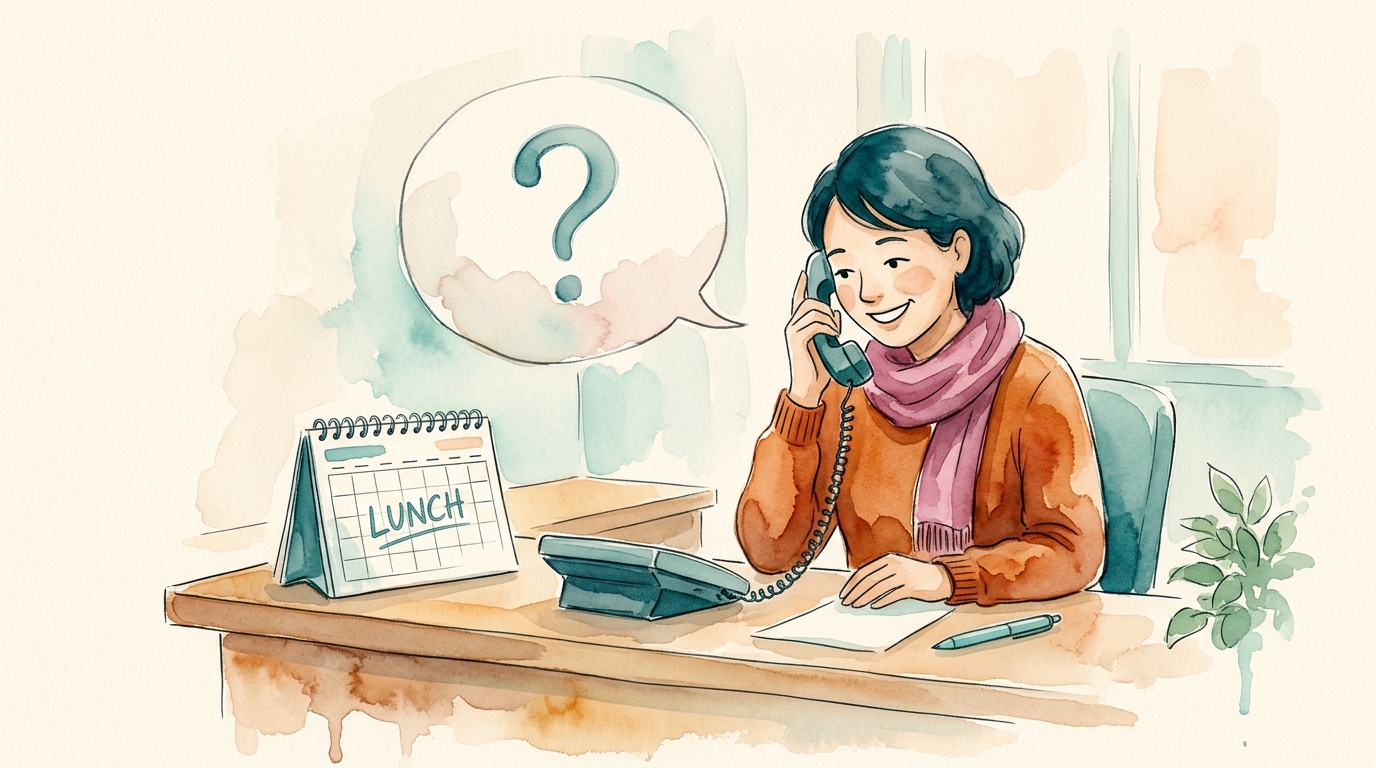
"Thank you for calling. We are currently assisting other patients. Please leave a message and we will return your call as soon as possible."
Something close to that plays in a great many dental offices in the middle of lunch, to a caller who can hear in the silence behind it that nobody is assisting anyone. The lights are on, the desk is empty, and the recording is saying something that is not true.
There is a second version, and it lies the other way. "Our office is currently closed." It plays because the after-hours greeting is the only recording the phone system has, so the system plays it whenever a call goes unanswered, including at lunch, including in the middle of a busy morning when the scheduling coordinator and the treatment coordinator are both on other lines. The office is open. The recording says it is not.
Neither greeting was written to mislead anyone. Both were recorded once, by whoever was handy, and never thought about again. This post is about what a true greeting says, and who is responsible for keeping it true.
Photo: Teju on Pexels
What the live greeting promises
The ADA publishes a short document of telephone scripts for dental offices, and its standard greeting is four short sentences: "Good (morning/afternoon). Thank you for calling (practice name). This is (greeter's name). How may I (we) help you?"
It contains four things. A time of day, which tells the caller the practice knows what time it is. The practice's name. A person's name. And a question, which is a promise that someone is about to do something for the caller. The ADA's advice around that greeting is all about a live human being: "Smile each time you answer the phone." "Speak slowly, enunciate clearly." "Remember that no one likes to be put on hold, so do that only when absolutely necessary."
The document says nothing about a recorded message. That is worth knowing, because it means the recording most offices lean on hardest at lunch has no model in the association's own script. The recording drops three of the four things the live greeting carries, and it replaces the question with an instruction: leave a message.
What a true lunch greeting says
A greeting is true when every sentence in it would survive the caller walking through the front door at that moment. Written that way, the lunch greeting has four jobs.
It says where the team is. "Our team is at lunch" is a plain fact and nobody resents it. "Assisting other patients" is a fact only when it is a fact.
It gives a time, not a promise. This blog's post on lunch coverage put it this way: the person who called during her own lunch hour gets a time, not a greeting. "We will be back on the phones at (time)" is a time. "As soon as possible" is not.
It says what to do in an emergency. This blog covered the three things an after-hours message has to carry, and the lunch greeting is the same message with the clock moved. A patient in pain at lunch needs the same sentence a patient in pain after hours needs.
It says who returns messages. Not "we." A role. "The scheduling coordinator returns messages when we reopen." That sentence is also a commitment inside the practice. The post on the third message argued that a message nobody owns is a message nobody returns.
Everything else in the greeting is decoration, and most of it should go. A caller at lunch does not need the website address, the office's philosophy of care or an invitation to follow the practice on social media.
The version for a practice that keeps the phone open
Some practices decide, on purpose, that the phone stays answered through lunch. For them the greeting question is simpler and gets missed more often.
If a person is on the phones at lunch, the recording the caller hears when that person is on another line is not a lunch greeting and it is not an after-hours greeting. It is a busy greeting, and it should say so. "We are on another call and will be with you in a moment" is true. "Our office is closed" is a lie the phone system tells on the practice's behalf, and the practice has to record a third message to stop it.
An office that stays open needs three recordings: one for closed, one for lunch if there is one, and one for busy, and the system has to play the right one at the right time. The first two most offices have. The third most offices have never recorded, so the system plays whichever it has.
Who keeps it true
A greeting goes false in two ways. The hours change and the recording does not, or the person who recorded it leaves and nobody else knows how to change it.
This blog's post on the administrator login made the point that the phone system has an administrator who can change the greeting and the call routing, and that the practice should have written down who that is. The greeting is the reason. When the office adds a half day, drops a half day, closes for a holiday, or moves lunch, the recording is a line on the list of things that change, and the line has a name beside it.
The other half is simpler and almost nobody does it: call your own number from a cell phone at lunch and listen. Then call after hours and listen. If the two recordings are the same, or either one says something the caller could disprove by looking through the window, the practice knows what to fix.
Where Laine fits, and where it does not
Laine, the AI receptionist in AiroDental, answers the lunch call rather than recording a greeting for it. It answers in the caller's language, in any of more than ninety, takes the appointment request, and books it into Dentrix, Dentrix Ascend, Open Dental or CareStack. When the call is over, the practice gets a written summary of what the caller needed, so the scheduling coordinator coming back from lunch reads it instead of listening to a voicemail.
Laine does not place calls to patients, and it does not decide the practice's hours. A practice that uses Laine still writes a true after-hours message for the moments it chooses to keep the phone closed, and still names the person who changes the recording when the hours change. What Laine removes is the hour in the middle of the day when the only honest greeting available was an apology.
There is no long-term contract and no onboarding fee. Hear how Laine answers the lunch-hour call.
Deren Flesher, DDS. Founder, AiroDental.
Frequently asked questions
- What should a dental office voicemail greeting say?
- Only things that would still be true if the caller walked through the door at that moment. For a lunch greeting: where the team is ("our team is at lunch"), a time a person will answer again rather than "as soon as possible," what to do in an emergency, and which role returns messages. For an after-hours greeting, the same four, with the hours. Leave out the website address, the philosophy of care and the social media invitation; a caller at lunch did not call for those.
- Is it wrong to say "we are currently assisting other patients" on a recording?
- Only when it is not true. If the whole team is at lunch, nobody is assisting anyone, and the caller can usually hear that. Say where the team is. The same sentence is fine as a busy greeting while a scheduling coordinator is on another line, because then it is a fact.
- Why does our phone play the "office is closed" message during the day?
- Usually because the after-hours recording is the only one the phone system has, so the system plays it whenever a call goes unanswered: at lunch, or in a busy stretch when every line is in use. The fix is a second recording for lunch, if the office closes the phone for lunch, and a third for busy, with the system set to play the right one at the right time. The phone system's administrator makes that change; this blog's post on the administrator login covers knowing who that is.
- Who should update the greeting when our hours change?
- One named person, usually the phone system's administrator, with the recording listed beside the hours on whatever page the practice uses when it adds or drops a half day or closes for a holiday. The quickest check is the owner's: call the practice from a cell phone at lunch and after hours and listen to what plays.
- Does Laine replace the greeting?
- At lunch, Laine, the AI receptionist in AiroDental, answers the call rather than playing a recording. It answers in the caller's language (more than ninety), takes the appointment request, and books it into Dentrix, Dentrix Ascend, Open Dental or CareStack, and the practice gets a written summary of what the caller needed. Laine does not place calls to patients and does not set the practice's hours. A practice still records a true after-hours message for the times it chooses to keep the phone closed, and still names who changes it.
Related articles
Lunch Is a Decision
Your employee policy manual has a page about lunch and a page about office hours, and nowhere between them is a sentence about the phone. So the phone over lunch is handled by whoever is nearest, which some days is the coordinator eating at her desk and some days is nobody. The ADA says to match your hours to when patients can reach you; a federal rule says an employee required to eat at her desk is working; your call log says how many people tried. Lunch is a decision. Write it down.
November 4, 2026 · 7 min read
Abandoned Is Not Missed
A patient says she hung up without leaving a message. Ask five phone systems what that call was and you get a missed call, an abandoned call, both at once, or a call in a category of its own. None of them is wrong. That is why every "practices miss this many calls" figure is one vendor's customers under one vendor's definition, and why the first job is reading your own system's sentence.
October 30, 2026 · 6 min read
The Voicemail You Leave
The email asking whether your voicemail is HIPAA compliant wants you to buy something. The federal answer has been public since 2002, and it fits on an index card: yes, leave the message, and limit it to your name, your number, enough to say which appointment, and a request to call back. The same answer covers the husband who picks up and the patient who asked you not to call the house. The rest is a sentence the doctor writes once.
October 28, 2026 · 6 min read