The Call That Went Badly
October 5, 2026 · 7 min read
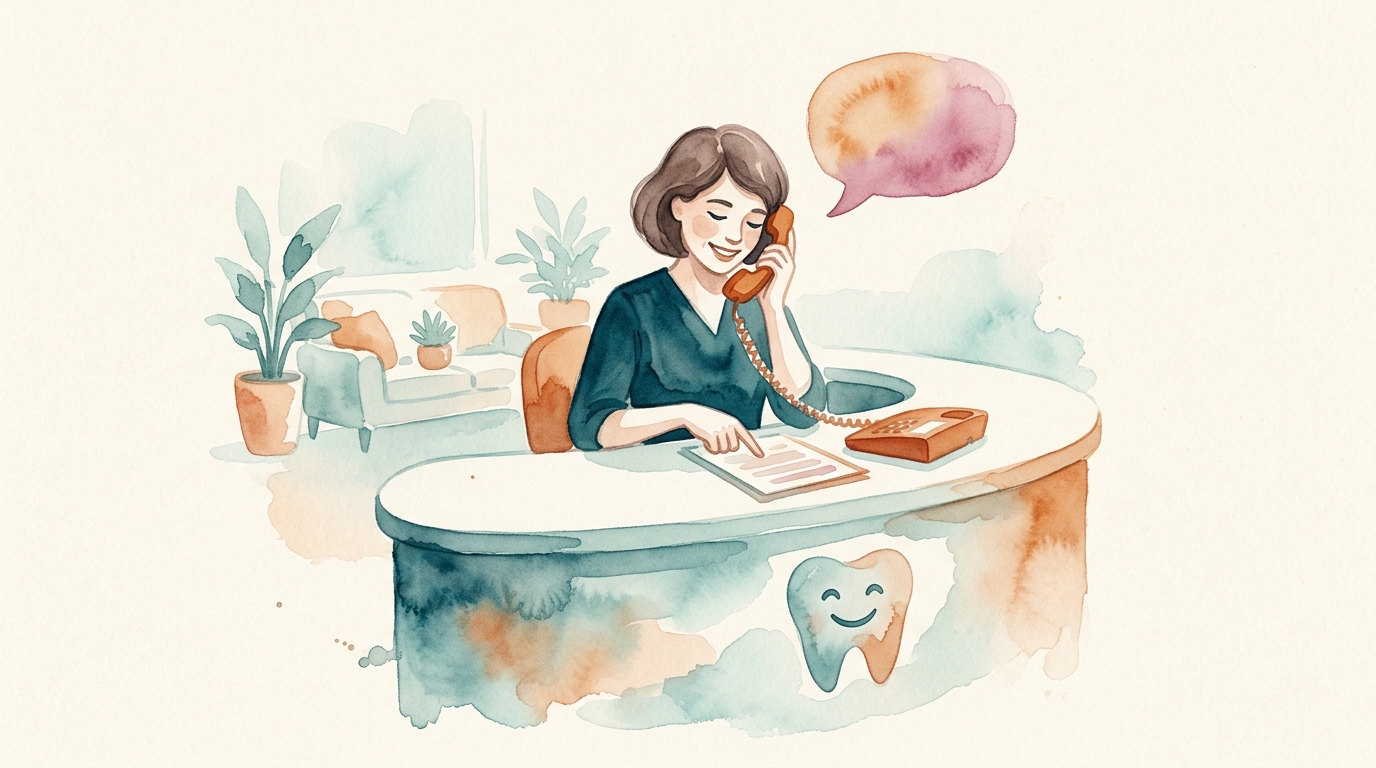
"What made you decide to look for a new dentist?"
Your scheduling coordinator asks it of every new patient, and a fair share of the answers have nothing to do with dentistry. They are about a phone call. Somebody called another office in pain and was offered an opening weeks out. Somebody asked a simple question about a bill and sat on hold until they gave up. Your coordinator says she is sorry to hear it, books the exam, and the story ends there.
Now turn it around. Somewhere across town, another practice's coordinator is asking the same question, and the person answering is describing a call to your office. That dentist will never hear about it. Neither will you.
What the Code says about the story you are told
The ADA Code has a section for the moment a new patient describes what happened at the last office. It is written about treatment, and it says patients "should be informed of their present oral health status without disparaging comment about prior services." The advisory opinion under it adds that a dentist's comments should be "truthful, informed and justifiable," and that this should, if possible, involve "consultation with the previous treating dentist(s)."
To be plain about what that is: it is a rule for dentists about clinical work, and it says nothing about phone calls. But the instinct in it is worth borrowing. You heard one side. The other office may have had a reason, and you are in no position to judge it. So your coordinator does not pile on, and that is right.
What the Code cannot do is carry the story back. There is no courtesy call between front desks. A bad call is the one failure in a practice that the patient reports to somebody else's team.
The people who could tell you are the people who took the call
Think about how you would find out. The caller is gone. The call was never on the schedule. Your phone system kept a row for it, a time and a duration, and nothing about what was said. That leaves the person who answered, and whoever was sitting beside her.
The ADA's guidance on patient complaints starts from a generous place, and it is worth reading with a team member in mind instead of a dentist. "Remember that a patient complaint does not indicate that you're a bad dentist or that your ability to care for patients is lacking," it says. "Typically, patient complaints result from a breakdown in or lack of communication." A companion page on the doctor and patient relationship gives the dentist a maxim for his own errors: "If you mess up, fess up."
Both pages are addressed to you. Neither says a word about your team, so this next part is my reading and not the ADA's. A coordinator will bring you her own bad call only if that first sentence holds for her too. A call that went wrong does not mean she is bad at her job. Usually it means she was asked a question nobody had answered for her, and she did what anyone does, which is make something up kindly and hope. If telling you about it costs her something, you will stop hearing about bad calls, and the calls will not stop.
Why the correction evaporates
Say you do hear about it. What happens next in most practices is a conversation. You find the coordinator between patients, you tell her what you would have wanted said, she nods, and both of you feel better. It is a decent way to treat a person and a poor way to fix a practice.
Look at who was not in that hallway. The other coordinator, who was at lunch. The assistant who covers the phones when the front is slammed. The person you have not hired yet. The correction went into one memory, and it will last exactly as long as that person works the phones and remembers.
Earlier posts in this series were about writing things down once: what the front desk is allowed to answer, the standing instructions a dentist writes in his own words, where the assistant's answer stops, and who may sign for a child. Every one of those pages was written before anything went wrong. A bad call is the first real test any of them gets, and for most of them it is the only review they will ever have.
Three things the page can turn out to be
So take the call to the document, not only to the person. Open the page that should have covered it, with the coordinator beside you, and one of three things will be true.
The page was right and she did not use it. Then the question is why. Either she could not find it with a caller on the line, or she did not know it existed, or it is written in a way nobody could say out loud. Two of those three are the page's fault.
The page was silent. This is the usual one. The caller asked something you never answered in writing, so she answered it for you. The fix is a sentence, in your words, added that day.
The page was wrong. You wrote it for the practice you had at the time, and something changed: a procedure you added, an associate who works different days, a plan you dropped. She followed it faithfully and it failed her. Thank her, and fix it.
Notice that in none of the three is the answer "be more careful." Careful is not an instruction. A sentence on a page is.
What the page says now
Take the kind of call every practice has had. A caller describes swelling, the schedule is full, and the coordinator offers the next open appointment, because that is what the schedule shows. Nobody ever told her swelling was different.
After the conversation in the hallway, the page should read differently than it did that morning. Under what counts as an emergency here, there is a new line in the doctor's words, something like: a caller who describes swelling in the face is seen today, and the doctor is told before the call ends. Beside it there is a date, and a few words on why it was added. The coordinator who took the call can be the one to type it. There is no better way to tell her the call was a hole in the page and not a mark against her.
Saige is where AiroDental keeps pages like that one. It holds the practice's own instructions and gives them back in the words a coordinator would use with a caller on the line, so when the doctor changes a sentence once, the next person who looks gets the new sentence and not the one from the hallway. A binder does the same job if somebody keeps it current. See your own pages in Saige, month to month, with no long-term contract and no onboarding fee.
The next caller who describes swelling is seen that day, by a coordinator who may never know there was a time the page did not say so.
Deren Flesher, DDS. Founder, AiroDental.
Frequently asked questions
- What should a dental practice do after a patient complains about a phone call?
- Two things, in order. Talk to the person who took the call, kindly, and then open the written page that should have covered it. The page was either right and not used, silent on the question, or wrong for the practice as it is today. Each of those has a different repair, and all three end with something on the page, dated, in the doctor's words. A conversation alone corrects one person's memory and nobody else's.
- How does a dentist find out a call was handled badly?
- Mostly from the team member who took it, which is the uncomfortable part. The caller is gone, the call was never on the schedule, and the phone system's log shows a time and a duration and nothing about what was said. So the owner hears about bad calls only if telling him is safe. The ADA's guidance on patient complaints says a complaint "does not indicate that you're a bad dentist." A coordinator needs the same sentence to be true for her.
- Does the ADA Code say anything about handling a bad phone call?
- No. Section 4.C of the Code says patients should be informed of their oral health status "without disparaging comment about prior services," and its advisory opinion asks that a dentist's comments be "truthful, informed and justifiable." That is a rule for dentists about clinical work. It is useful here only as an instinct: when a new patient describes a bad call at another office, you have heard one side.
- Why is a verbal correction not enough?
- Because of who was not there. The other coordinator, the assistant who covers the phones when the front is slammed, and the person you have not hired yet never hear it. The correction lasts as long as one team member works the phones and remembers. A sentence added to the practice's written instructions reaches whoever answers next.
- Where does Saige come into this?
- Saige is the team-facing side of AiroDental. It holds the practice's own instructions and gives them back in the words a coordinator would use with a caller on the line. When the doctor changes a sentence, the next person who looks gets the new sentence. A binder does the same job if somebody keeps it current; the point is that the correction lives on a page and not in a hallway.
Related articles
The Caller Who Tried Twice
"We must have been on the other line" is a guess, and patients can hear it. Once the scheduling coordinator has looked at the call log, she can say what actually happened, ask what the call was about, and find everyone else who tried twice and never made it to the counter.
October 14, 2026 · 5 min read
The Teenager Who Drove Himself
A seventeen-year-old with a license walks up to the counter by himself. May he be seen today, and who gets told what afterward? The first answer belongs to your state. The second is a federal rule most front desks guess wrong. Both belong on one page the doctor writes before he arrives.
October 12, 2026 · 7 min read

The Thing You Are Still Doing By Hand
Open the top drawer at your front desk. There is a notebook in it that was supposed to be gone when you bought the software. A by-hand process survives for one of three reasons: it is a backup, nobody was entitled to end it, or the software does not do the job. Each one calls for a different response, and none of them is throwing the notebook away.
October 9, 2026 · 6 min read