When a Patient Asks the Assistant
October 7, 2026 · 7 min read
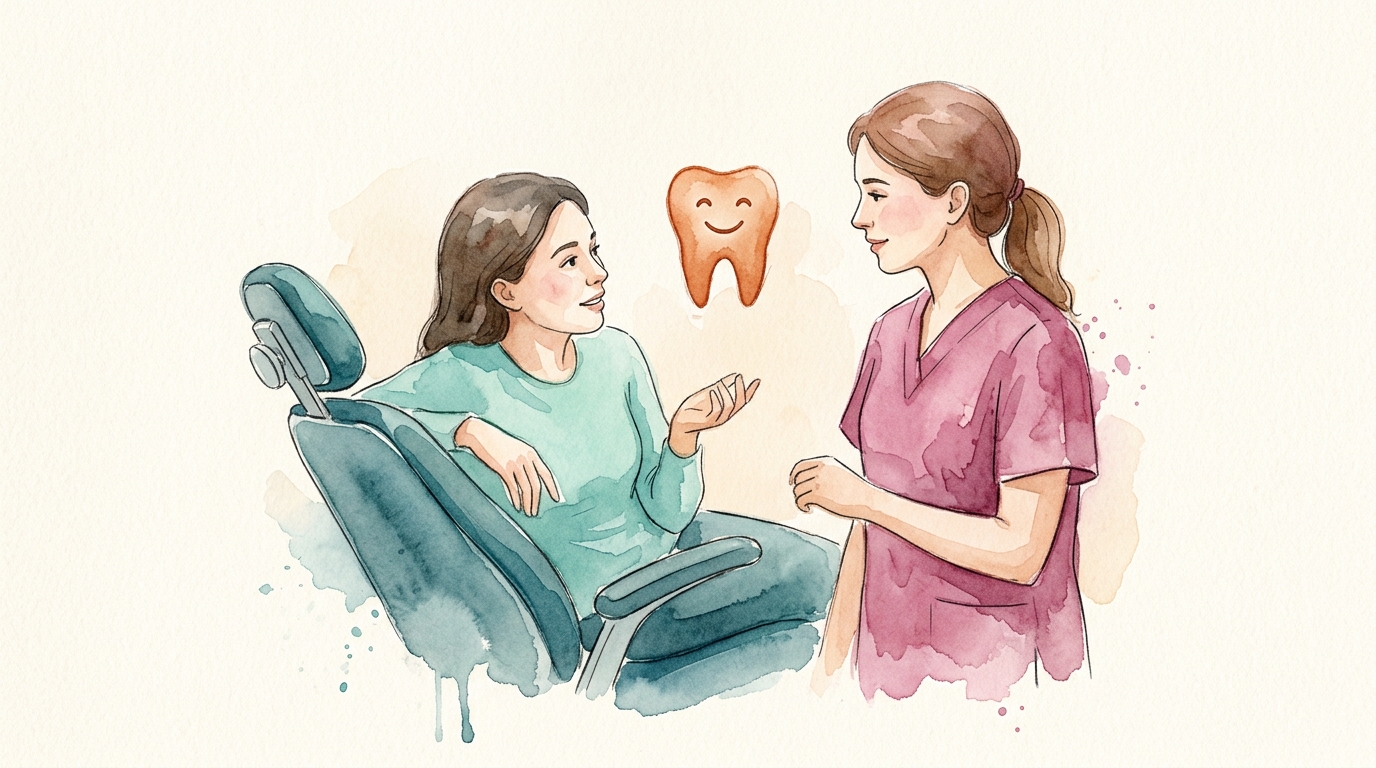
"What would you do if it was your tooth?"
Every assistant has heard it. The doctor has presented the crown and stepped out to check hygiene or numb the next room. The patient is still reclined, the bib is still on, and the question goes to the person who is still in the room. The assistant. She has been beside this doctor for more crowns than she can count. She has an opinion. Whether she is allowed to give it is a question most practices have never answered out loud.
This is the chairside version of a question this blog took up two weeks ago for the front desk, and the answer sits in a different place. The difference is written down in two documents most practices already have and have not read this way.
The ADA draws the assistant's line somewhere else
The ADA's practice management guidance on consent is direct about who holds the conversation. Informed consent, it says, "is required for every procedure performed other than those covered under general consent and the dentist must be the one to have that discussion with the patient." A few lines later it says informed consent "cannot be considered legally compliant if it has not included a dentist-patient conversation."
Then comes the sentence that matters for the assistant: "While it's acceptable to have a clinical staff member discuss treatment options and risks, the informed consent process requires that the dentist thoroughly discusses that information with the patient."
A clinical staff member. That is the assistant. It is also the hygienist. It is not the front desk, which answers from what already exists in the doctor's words. The assistant may go further: she may discuss options and risks. What she may not do is be the consent conversation. The doctor has to have it, and the ADA says the patient "must have the opportunity to ask questions about the different treatment options presented," so the doctor has to be there for the questions too.
So the assistant's line is not "say nothing clinical." It is closer to "say what is true about the options, and do not let that stand in for the conversation the doctor owes."
The state draws it by distance
The same ADA guidance says "the requirements proving informed consent vary by state" and to check your own practice act. Mine is Oklahoma's, so that is the one I will quote, with the caution that every state has to be read from its own act.
Oklahoma defines a dental assistant by supervision. She is "an individual working for a dentist, under the dentist's direct supervision or direct visual supervision," and she "may assist a dentist with the patient; provided, this shall be done only under the direct supervision or direct visual supervision and control of the dentist." Direct visual supervision, in the same section, "means the supervisory dentist has direct ongoing visual oversight which shall be maintained at all times during any procedure authorized to be performed by a dental assistant."
Read that against the scene at the top. The front desk is defined by distance from the dentist. The assistant is defined by the dentist being close. By statute, the doctor is in the building, and for the procedures the assistant is permitted to perform, within sight. When the patient asks her, the person who owns the answer is down the hall, and often in the next room.
For the front desk, "I'll have the doctor call you" is a handoff across a day. For the assistant, "let me get her" is a handoff across a hallway. She is not deflecting. She is routing the question to the one person the ADA says has to answer it, and that person is right there.
Three questions, three different answers
"What would you do" is really three different questions wearing the same words, and the answer is different for each.
Sometimes it means "tell me again what she said." The patient heard the doctor and did not retain it, reclined with a mirror in his mouth. The assistant repeating the doctor's own words, in plainer ones, is one of the most useful things that happens in that chair, and nothing stands in her way. She is making the doctor's recommendation audible a second time.
Sometimes it means "what are the choices." The patient wants to know whether there is an alternative to the crown and what it costs him in risk. This is exactly what the ADA says a clinical staff member may discuss. The assistant can describe the options and risks as the doctor presented them, and say the doctor will go through them again before anything is decided. The guidance is careful here: the assistant discussing options does not satisfy consent. It prepares the patient for the conversation that does.
And sometimes it means exactly what it says. What would you do. That is a request for a recommendation, and a recommendation is the doctor's. Not because her judgment is poor, but because the practice act does not license her to make one and the ADA says the dentist must. The honest answer is not "I can't say." It is "the doctor should be the one to answer that, and she's right here."
The setting is the problem, not the assistant
There is a line in the same ADA guidance that almost nobody reads: consent for complex treatment "should be obtained in advance of the treatment appointment to allow patients time to consider all the risks, benefits and alternatives," and consent obtained from patients on nitrous oxide or certain medications "may be invalid."
Look at where the question gets asked. Reclined, numb, sometimes on nitrous, the doctor out of the room. The chairside question arrives in the exact setting the ADA has already said is wrong for the answer. The assistant cannot fix that by answering better. The schedule fixes it, by moving the conversation earlier, to a consult where the patient is upright and the doctor is present, so that by the time anyone is in the chair the question has already been asked and answered once.
The assistant still gets the question. She always will. Her best move is not a better answer. It is a shorter path back to the person who owes one.
What the doctor writes down
None of this works if it lives in the assistant's head. Like the front desk with the doctor's standing instructions, the assistant needs to know which questions she answers from the doctor's own words, which she describes and hands back, and which she hands back immediately. Post-op expectations for the procedures the practice does most. What the procedure will feel like. What the options were, in the doctor's phrasing. And the one sentence for "what would you do," so she is not composing it under a bib with a patient looking at her.
That document is a training document, which is what Saige holds: the doctor's words, in one place the assistant can read from instead of remembering, kept current when the doctor changes how she explains a crown. We do not lock anyone into a long-term contract and there is no onboarding fee, so the first thing you write can be this one.
The patient is going to ask. The only question is whether the assistant knows where the answer lives.
Deren Flesher, DDS. Founder, AiroDental.
Frequently asked questions
- Can a dental assistant explain treatment options to a patient?
- According to the ADA's practice management guidance on consent, it is acceptable for a clinical staff member to discuss treatment options and risks. The assistant is a clinical staff member. What that discussion cannot do is take the place of the informed consent conversation, which the ADA says the dentist must hold personally. The assistant can describe what the doctor presented and the risks that go with each option; the doctor still has to go through it with the patient before anything is decided.
- What is the difference between what the assistant can say and what the front desk can say?
- The ADA's allowance names a clinical staff member, and the front desk is not one. The scheduling coordinator and the treatment coordinator answer from what already exists in the doctor's words, such as the fee schedule, the record and the doctor's written standing instructions. The assistant may go further and discuss options and risks. The state practice act adds a second difference: the assistant works under the dentist's direct supervision, so the doctor is in the building and often in the room, which makes handing the question back a matter of a few steps rather than a callback.
- What should the assistant say when a patient asks "what would you do?"
- Treat it as a request for a recommendation, because that is what it is, and a recommendation belongs to the doctor. The honest answer is not "I can't say." It is something like "the doctor should be the one to answer that, and she's right here." If the patient is really asking to hear the recommendation again, the assistant can repeat it in the doctor's own words. If the patient is asking what the choices are, she can describe them as the doctor presented them and say the doctor will go through them before anything is decided.
- Why does the ADA say consent should happen before the treatment appointment?
- The guidance says consent for complex treatment should be obtained in advance to give the patient time to consider the risks, benefits and alternatives, and it notes that consent obtained from a patient on nitrous oxide or certain medications may be invalid. The chairside question tends to arrive reclined, numb and with the doctor out of the room, which is the setting the ADA has already described as the wrong one. Moving the conversation to an upright consult with the doctor present is a scheduling fix, not something the assistant can fix by answering better.
- Does this apply in every state?
- No two practice acts read the same, and the ADA guidance itself says the requirements for proving consent vary by state. The post quotes Oklahoma's act because that is the one the author practices under. A practice in another state should read its own act for how it defines a dental assistant, what supervision it requires and what it reserves to the dentist. None of this is legal advice; it is a reading of two public documents, and the practice's attorney or state association is the place to confirm how they apply. The same applies to the sentence the office uses with callers who are not patients of record, which is a separate written decision the dentist owns.
Related articles

AiroDental Raises $0 to Keep Dental AI Accountable to Dentists
AiroDental today announced that it has raised $0 in outside funding. No venture capital, no private equity, no debt, no board. Founder Deren Flesher, DDS, a practicing dentist in Edmond, Oklahoma, owns 100 percent of the company, and explains why the person deciding what dental software does should be someone who has to use it in a dental practice.
September 8, 2026 · 5 min read

The Handoff Nobody Documents: From the Chair to the Front Desk
Every practice runs the same twenty feet dozens of times a week. The doctor finishes, the patient walks up front, and a different person takes over the conversation. Almost nobody has written down what is supposed to cross with them. The ADA has, and the word it uses for the person at that desk is worth reading twice.
August 31, 2026 · 7 min read

What Happens to Your Data If You Leave
Most owners sign the business associate agreement and never read it again. Inside it is the only provision in federal regulation about what a vendor owes your practice when the relationship ends, and it says considerably less than you would expect.
August 21, 2026 · 8 min read