The Treatment Plan Nobody Followed Up On
August 12, 2026 · 7 min read
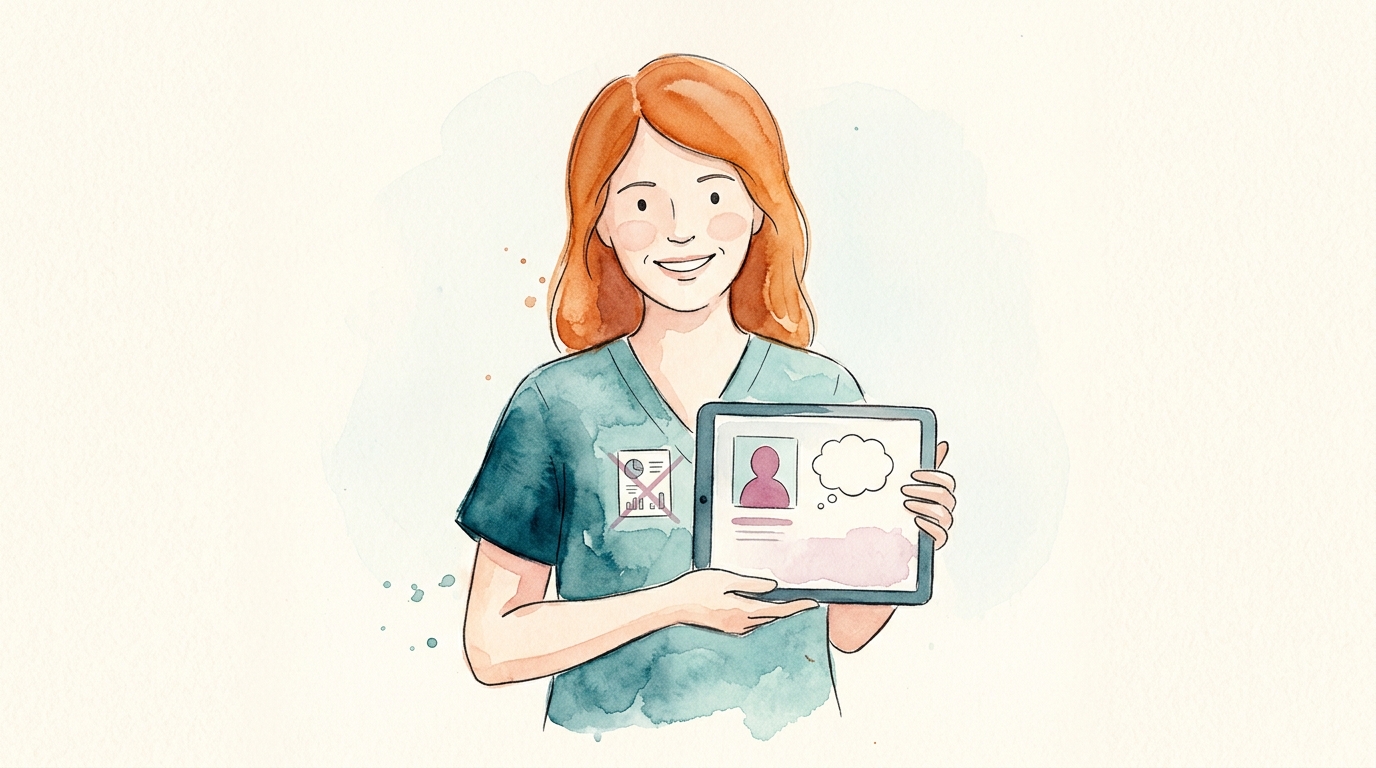
Two patients hear the same recommendation on the same morning.
The first says no. Not today, not this year, maybe not ever. You explain what happens if the tooth is left alone, you write down that you explained it, and the refusal goes in the chart. That patient is handled. There is a record of the conversation and a reason to raise it again at the next visit.
The second says they need to think about it. That is where it ends. No refusal, no decision, nothing to document, because as far as the software is concerned nothing happened. The treatment sits unscheduled and nobody calls. At some point that patient stops being someone you are waiting on and becomes someone you forgot about.
The first patient is a solved problem. The second is the whole problem. This is not the same group as the patients who have drifted away entirely. These people are active, the treatment is diagnosed, and nothing was ever scheduled.
The obligation does not end when the patient hesitates
The ADA's practice guidance on informed consent and refusal is worth reading, but one sentence does most of the work:
"If you choose to continue to treat the patient, you are committing to evaluating and treating the patient for as long as the doctor-patient relationship exists. This means that you should continually inform the patient of the recommended treatment, even though it was previously declined, and to advise the patient of how the refused treatment can impact their oral health."
Read that with the second patient in mind. The ADA is describing an ongoing duty to keep raising recommended treatment with someone who already said no. If that is the expectation for a patient who declined outright, it is hard to argue the one who never answered deserves less.
The guidance is written about documented refusal, so it does not directly address the patient in limbo. That is the point. The situation the ADA describes is the one practices handle well, because it produces a form and a chart note. The one that produces nothing is the one that goes unhandled.
Follow-up is usually sold as revenue recovery. It is easier to sustain as continuity of care.
What the numbers can and cannot tell you
Search for statistics on this and you will find plenty. Most are made up.
There is no national dataset on how much diagnosed treatment sits unscheduled. Anyone quoting an average dollar figure for "the typical practice" is guessing, and the guesses run from fifty thousand dollars to more than a million, which tells you what the number is worth. Your own software can give you your own figure. Nobody can give you the national one.
Case acceptance is a similar story. The ADA does publish a number, on a practice-management advice page, phrased as a question the dentist should ask about their own practice: are at least 75 to 80 percent of case presentations accepted? That is a target with no data behind it, sitting beside other rules of thumb about overhead and collections. It gets reworded into "the average practice accepts 70 percent, according to the ADA," which is a different number and a different kind of claim the ADA never published.
What is actually measured is the patient side, and it is less flattering to the follow-up argument than you might expect.
The ADA Health Policy Institute, analyzing national survey data from 2013 through 2016, found that 15.2 percent of respondents needed dental care in the previous twelve months and did not get it, roughly 47.6 million people. Among working-age adults aged 19 to 64 the figure was 20 percent. Asked why, the answers were overwhelmingly financial. Could not afford the cost, 11.4 percent of those surveyed. Insurance did not cover it, 3 percent.
Further down that same list, at 0.7 percent of those surveyed, sits the reason that describes the second patient exactly: they expected the problem to go away.
That number is small and should be reported as small. Cost is the dominant reason people go without care they need, and no amount of follow-up changes what a crown costs. But unlike the cost barrier, this is the part a practice controls completely.
One more piece of context. In its second quarter 2026 economic poll, the institute noted that dentists reported being busier and wait times were up while consumer spending on dental care grew only about one percent, and offered as a possible explanation that traffic may be rising for relatively low-value services. The institute is explicit that this is a hypothesis that merits further analysis. But it describes something a lot of owners would recognize: a full schedule that is not turning into completed treatment.
Four things hiding inside "let me think about it"
"I'll think about it" is not one answer. It is four, and each needs a different follow-up.
Money. The most common by a wide margin, and the one people are least willing to say out loud. The follow-up is not persuasion, it is information: what the plan covers, what the balance would be, whether the benefit year matters, what payment options you offer.
Time. They want the treatment and cannot see where it fits. The follow-up is a specific appointment offer, not an invitation to call back sometime.
Understanding. They nodded because the room was full of equipment and it seemed like the moment to nod, and they could not repeat the recommendation back afterward. The follow-up is a plainer explanation, ideally not while they are reclined.
Nothing. No objection, no obstacle, they simply left. This group is larger than most practices think and the easiest to recover, because there is nothing to overcome.
Sorting the list before you work it keeps follow-up from feeling like cold calling. You are answering four different unasked questions, not running one script at everybody. And keep the list somewhere other than one person's memory, because that is the first thing to go when the person who knows everything leaves.
The half of follow-up that is inbound
Here is what gets missed when follow-up is treated purely as outbound work.
Some of these patients do think about it. Then they call, and get a voicemail, or a busy signal, or a hold that outlasts their resolve. The patient did exactly what you asked and the practice was not there.
That call is the most valuable one the office will get that day, and it sounds like every other ringing line. It arrives during a huddle, during a procedure, while two people are already on hold. Whoever picks it up needs to put the appointment on the schedule right then, because a patient who just talked themselves into treatment will not stay that way through a callback.
Laine answers the phone when your team cannot. It handles the call, puts the appointment on the schedule, and writes back to your practice management system, with live integrations for Dentrix, Dentrix Ascend, Open Dental, and CareStack. A follow-up list is worth only as much as your ability to catch the calls it produces.
If you want to hear what a patient hears, we can show you. No contracts, no onboarding fee.
The patient who said no is on the books to be asked again. The one who said maybe is waiting to hear from somebody. Decide who that is.
Deren Flesher, DDS. Founder, AiroDental.
Frequently asked questions
- How soon should a practice follow up on treatment a patient did not schedule?
- Soon enough that the conversation is still fresh, and with something specific to say. A call that offers an actual appointment time, or answers the question the patient did not ask out loud, works. A call that asks whether they have thought any more about it puts the work back on the patient and usually gets a polite no. The more useful question is not how fast, but who owns it and where the list lives.
- What is a good case acceptance rate for a dental practice?
- Nobody credibly knows, and be careful with anyone who tells you otherwise. The ADA publishes a target of at least 75 to 80 percent of case presentations accepted, on a practice-management advice page, with no data behind it and alongside other rules of thumb about overhead and collections. The averages circulating in dental content, commonly 42, 45, 50, 61, or 70 percent, disagree with each other and several are misattributed to the ADA. Measure your own practice over time and compare it to itself. That number is real.
- Does following up on declined treatment come across as pressuring the patient?
- It depends entirely on what you are following up with. Persuasion feels like pressure. Information does not. Most unscheduled treatment stalls on money, and a call that explains what the plan covers and what the balance would be is a service, not a sales attempt. The ADA's own guidance on informed refusal describes continuing to inform a patient of recommended treatment even after they declined, as part of the ongoing relationship rather than as a sales activity.
- How much unscheduled treatment does the average practice have?
- There is no national figure, and the ones in circulation range from about fifty thousand dollars to more than a million for "the average practice," which should tell you enough. Your practice management software can produce your own number. That is the only one worth acting on.
- Where does a follow-up list usually break down?
- Two places. It lives in one person's memory rather than in the software, so it disappears when that person is out or moves on. And the calls it generates come back into a phone system that is already saturated, so a patient who was ready to schedule reaches a voicemail instead. Outbound follow-up and inbound coverage are the same problem viewed from two ends.
Related articles

The Count
No practice closes the day on a feeling; the day sheet is set against the deposit. A software trial deserves the same habit. This post shows how to keep two columns, the task done in the tool and the task done the old way, who keeps them, and what to do when the count and the mood disagree.
October 16, 2026 · 6 min read
The Caller Who Tried Twice
"We must have been on the other line" is a guess, and patients can hear it. Once the scheduling coordinator has looked at the call log, she can say what actually happened, ask what the call was about, and find everyone else who tried twice and never made it to the counter.
October 14, 2026 · 5 min read
The Thing You Are Still Doing By Hand
Open the top drawer at your front desk. There is a notebook in it that was supposed to be gone when you bought the software. A by-hand process survives for one of three reasons: it is a backup, nobody was entitled to end it, or the software does not do the job. Each one calls for a different response, and none of them is throwing the notebook away.
October 9, 2026 · 6 min read