The Count
October 16, 2026 · 6 min read

No dental practice closes the day on a feeling. Before anyone goes home, the payments posted to the day sheet are added up and set against the deposit, and if the two disagree, somebody finds out why. Nobody at the front desk would accept "it felt like a good day" in place of that.
The habit is old enough that the ADA's New Dentist Blog lists it among its fraud precautions: "Review every posted transaction on the day sheet," and "run a check register daily and compare it to the daily deposit slip." That advice is about theft and has nothing to say about software. I am borrowing only the habit underneath it, which is that a practice already knows how to check a claim against a count.
Then the same practice takes a free trial of a new product, and when the trial ends, the decision gets made on how everyone felt about it.
An earlier post on this blog argued that a trial exists to find out whether anyone in the building will use the product, and that "used" has to mean something you can count. It gave the counting one paragraph. This is the rest.
Two columns, not one
Every tool on trial is supposed to take over a task. So the count has two columns: how many times the task was done in the tool, and how many times it was done the old way.
The vendor will hand you the first column. Nearly every product has a usage screen, and near the end of a trial someone will send you a figure from it. That figure is true, and it is half the page. The number of instruction sheets sent from the tool tells you nothing until you know how many went out from the printer over the same stretch.
The second column is yours to build, because no product reports on the work it did not do.
Where the second column lives
It is usually already in the building, in whatever the old way leaves behind.
For a phone tool, it is in your phone system's call log, which keeps a row for every call whether or not anything answered it. Calls the tool handled are column one. Rows that rang out while you were open are column two. An earlier post walked through reading that log, and one detail from it matters here: a number that shows up twice among the unanswered rows is one person trying again. This week's post on what to say to her is the human half of the same count.
For a tool that sends post-op or pre-visit instructions, the old way is the printed sheet. Count the sheets in the tray before the trial starts and again when it ends. Whatever is missing went out by hand.
For a tool meant to finish clinical notes before the patient leaves the chair, the old way is the note written up later. Nothing records that by itself, so the assistant whose notes they are keeps a tally: one mark for each note finished in the tool, one for each finished afterward.
For online booking, the old way is the coordinator typing the appointment in herself after a phone call. Your practice management system may show what created each appointment. If it does, that is both columns in one report. If it does not, the coordinator keeps the tally.
Where there is no log and no tray, there is a pad and a pencil.
Who holds the pencil
The person whose day the tool changes. Not the office manager on her behalf, and not the owner from memory when the trial is over.
Tell her what the count is for before it starts. It is a count of the product, not of her. A mark in the old-way column is not a mark against anyone. It is the most useful thing on the page, and a few words beside it saying why (the patient was in a hurry, the screen was slow, the tool had no place for it) are worth more than anything said in the demo.
Take a count of the old way before the trial begins, over an ordinary stretch, so there is something to set the trial against. Sometimes that first count is the finding, because the task turns out to come up far less than anyone assumed. Then look at the page together on a rhythm the practice already has, the morning huddle or the team meeting, so it gets read while people still remember the days it describes.
When the count and the mood disagree
They often will, and the count wins in both directions.
If everyone likes the product and the old-way column has not moved, the product has not taken. The tray is still emptying. An earlier post was about the thing a practice is still doing by hand long after buying the software meant to replace it. The second column is that same notebook, caught while saying no is still free.
If the team is lukewarm and the first column is full, they are using it. Find out what is irritating them and whether it can be fixed, because a tool people use and grumble about is in better shape than one they praise and avoid.
Either way, write the two totals at the top of the page before the vendor's email arrives asking whether you would like to continue. The answer to that email is on the page.
Counting us
The same page works on what we sell. Laine answers the phone and books the appointment, so its second column is the open-hours ring-outs still showing in your own phone system's log, which is a record we do not keep and cannot edit. Saige holds the practice's written procedures where the team can ask for them, so its second column is the office manager's own tally of how often someone still came to find her with a question the practice has already answered in writing.
It is month to month, with no long-term contract and no onboarding fee, so the count gets to make the decision. Bring your two columns to a walkthrough.
Deren Flesher, DDS. Founder, AiroDental.
Frequently asked questions
- How do you measure whether a dental team is actually using new software?
- Count the task, not the logins. Every tool is supposed to take over a task, so keep two columns: how many times the task was done in the tool and how many times it was done the old way. The vendor's usage screen gives you the first. The second comes from what the old way leaves behind, such as the phone system's call log, the tray of printed sheets, or a tally kept by hand.
- What should a dental practice track during a software free trial?
- One task, written down before the trial starts, and both ways of doing it. Take a count of the old way first, over an ordinary stretch, so there is something to compare against. During the trial, the person whose day the tool changes marks each time the task is done in the tool and each time it is done the old way, with a few words on why.
- Who should keep the count?
- The team member whose work the tool changes: the scheduling coordinator for a phone or booking tool, the assistant for a clinical notes tool. Tell her before it starts that it is a count of the product and not of her. A mark in the old-way column is useful information, not a mark against anyone.
- What if the team likes the software but the count is low?
- Then it has not taken, and the count should decide. If the old way is still being used as much as before, liking the product does not change that. The reverse also holds: if the team is lukewarm and the count shows the task being done in the tool, they are using it, and the next step is to find out what is irritating them.
- How would this work with AiroDental?
- The same way. Laine answers the phone and books the appointment, so the second column is the open-hours ring-outs still showing in your own phone system's call log. Saige holds the practice's written procedures where the team can ask for them, so the second column is the office manager's own tally of how often someone still came to her with a question already answered in writing. It is month to month, with no long-term contract and no onboarding fee.
Related articles

The Teenager Who Drove Himself
A seventeen-year-old with a license walks up to the counter by himself. May he be seen today, and who gets told what afterward? The first answer belongs to your state. The second is a federal rule most front desks guess wrong. Both belong on one page the doctor writes before he arrives.
October 12, 2026 · 7 min read
The Thing You Are Still Doing By Hand
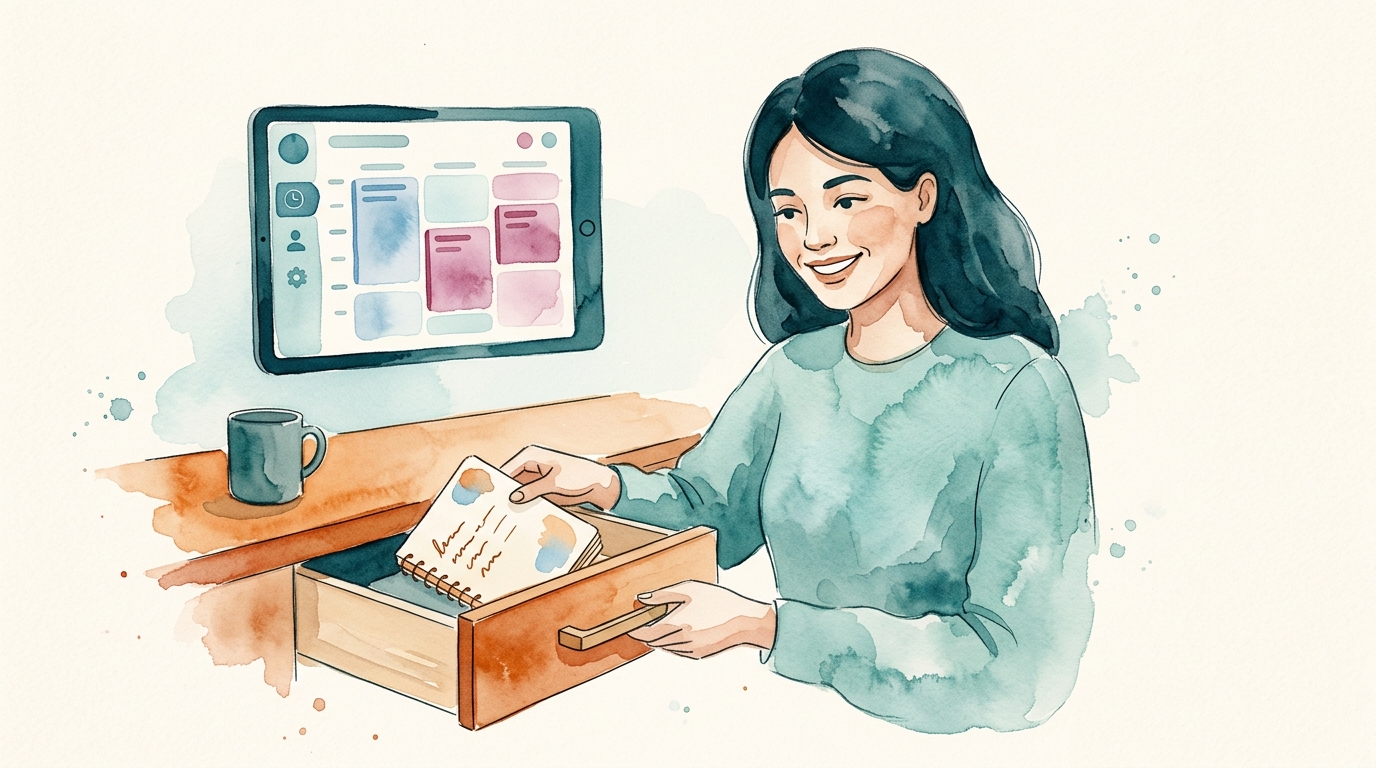
Open the top drawer at your front desk. There is a notebook in it that was supposed to be gone when you bought the software. A by-hand process survives for one of three reasons: it is a backup, nobody was entitled to end it, or the software does not do the job. Each one calls for a different response, and none of them is throwing the notebook away.
October 9, 2026 · 6 min read
Reading Your Own Call Log
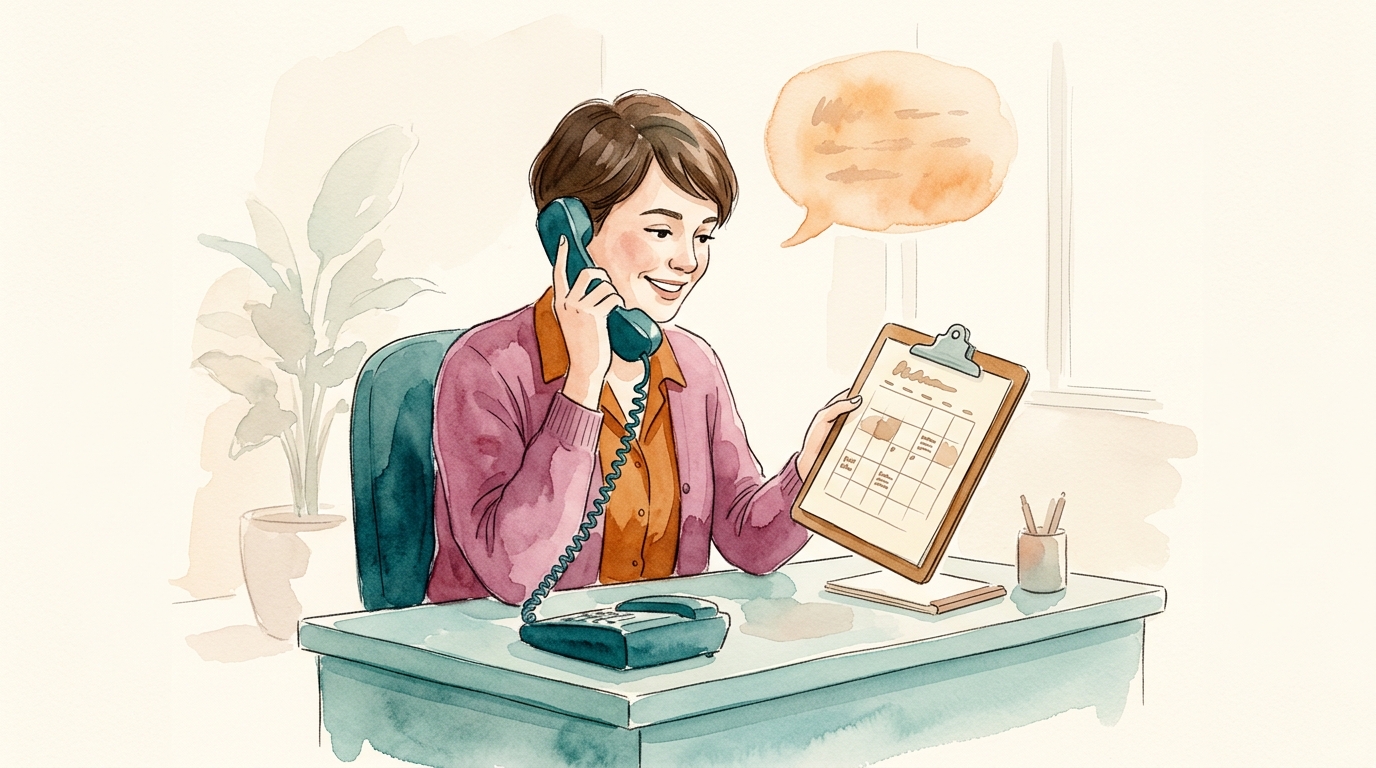
"I called earlier and nobody picked up." The front desk apologizes and guesses. The phone system knows: it wrote a row for that call the moment it came in. This post walks through a call log column by column, shows why the word "missed" means something different in each phone system, and says what a row will never tell you.
October 7, 2026 · 6 min read