After-Hours and Weekends: What Patients Do When Your Dental Practice Is Closed
June 29, 2026 · 6 min read
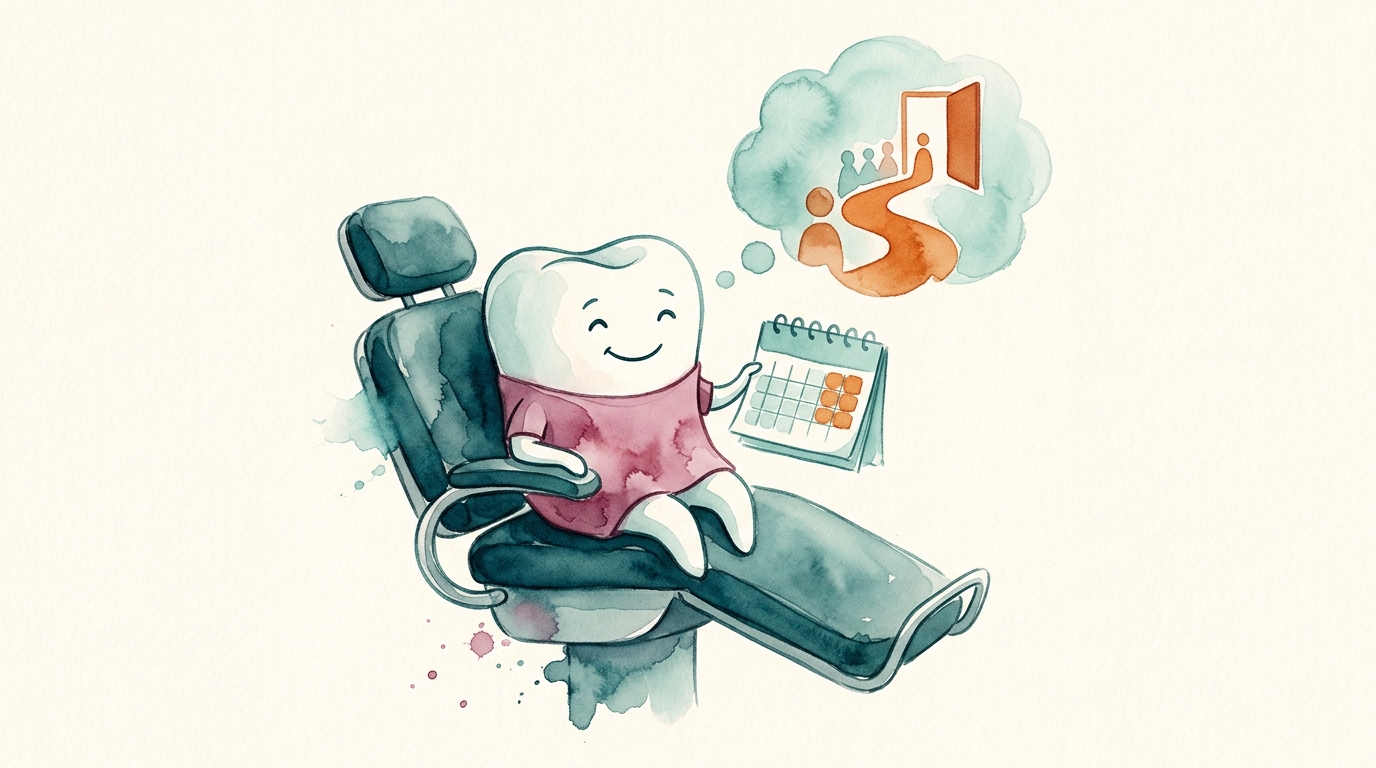
Most of the calls a dental practice misses don't happen during business hours. They happen the second the office closes.
The phone rings at 5:47 PM on a Friday. It rings again that evening. It rings Saturday morning. It rings Sunday afternoon, twice. By the time the front desk pulls up the voicemail on Monday morning, the question isn't "did we miss anything?" The question is what happened to those patients in the meantime.
This post is about that question. Not the dramatic version with a broken tooth in the middle of the night (those happen, but they're rare). The everyday version. The new patient comparing two offices. The recall patient who finally remembered to call. The existing patient whose temporary crown popped off over the weekend. The parent trying to find anyone who takes their insurance before the new school year.
What those patients do when they reach voicemail or a dead ring tells you a lot about your practice's growth ceiling.
Where the missed calls actually go
When a practice is closed, the call doesn't disappear. It becomes one of four things.
The hang-up. The most common outcome. The patient calls, hears your voicemail, and ends the call without leaving a message. Some redial during business hours. Many do not. There is no trail in your system that the call ever happened. The front desk has no way to follow up because there is nothing to follow up on.
The voicemail nobody acts on quickly. Voicemails get listened to in batches, often partway through Monday morning. By then the patient with a chipped front tooth has booked somewhere else. The patient asking about a new-patient exam has moved on. The patient asking about financing for their daughter's wisdom teeth has googled three more offices. A voicemail returned mid-Monday is a different conversation than a live answer Saturday morning.
The competitor call. Patients comparing offices, especially new ones, rarely call only one. If your phone goes to voicemail and the next office on the search results page picks up live, that office wins the appointment. The patient never sees the inside of your operatory.
The emergency department. The CDC's National Center for Health Statistics, in a June 2025 data brief, reported an annual average of about 1.94 million emergency department visits for tooth disorders during 2020 to 2022, with adults ages 25 to 34 making up the largest share at 29.2 percent. Most of those visits are for problems a dental office could have triaged in a five-minute call. The ED visit gets the patient through the night with antibiotics or pain medication and a referral, often back to a dental office. Sometimes back to yours. Often not.
Your share of those four buckets is a function of one thing: what happens when somebody calls your office after the front desk has gone home.
Why Monday morning is the hardest shift in the practice
Office managers know this one in their bones. Mondays do not start at zero. They start with the weekend's backlog: voicemails to return, online forms to read, texts to chase, no-shows from Friday to reschedule, and a front desk that has not had a full conversation with the office in 60 hours.
The morning huddle is short because the phones are already ringing. The patients who called over the weekend are now competing with the patients calling right now. The front desk picks one or the other, and somebody waits.
The hidden cost is not just the lost new patient. It is the recall patient who called Saturday, didn't get a return call until Tuesday, and ended the conversation with "you know what, just take me off the list for now." It is the staff member who starts every Monday under-water and finishes every Monday short-tempered.
What good after-hours coverage actually looks like
Most dental offices have tried one or more of: a generic answering service, a forward to the office manager's cell phone, a recorded message with an emergency number, an online booking widget, or nothing. Each has a failure mode worth naming.
A live answering service that does not know your practice can take a message, but it cannot schedule, it cannot quote a price, it cannot tell a patient whether you take their insurance, and it cannot triage. A cell-phone forward solves the front-desk version of the problem by creating a new problem for one specific human. An online booking widget works for the patient who already trusts you and already knows what they want, which is not most patients calling after hours.
Useful after-hours coverage does four things, and the order matters.
First, it picks up live. Not a recording. Not a menu tree. A real conversation in the same tone the patient would get during business hours.
Second, it triages the way you would. A broken temporary, a swollen jaw, a knocked-out tooth, and a question about Invisalign are four very different calls. The first two probably go to the on-call dentist. The third needs a fast handoff. The fourth wants a callback during business hours and an appointment slot, ideally booked while the patient is still on the phone.
Third, it schedules. Not a "we will call you back" promise. An actual appointment, written into the same system your front desk opens Monday morning, with the patient's insurance noted, their reason for the visit captured, and any callbacks the front desk needs to make already queued up.
Fourth, it hands off in a way the front desk can use. A short summary the office manager can scan in 30 seconds. The patient's name, the reason for the call, what was promised, what was scheduled, what still needs attention. Not 14 voicemails to listen to. A short list.
Where Laine fits
Laine is the AI voice receptionist we built into AiroDental for this exact shift in the day. It answers the calls your office misses, including weekends, after hours, and overflow during business hours. It's trained on your practice (your providers, your hours, your insurance list, your scheduling rules), it writes scheduled appointments back into your practice management system, and it leaves your front desk a short summary instead of a voicemail pile.
It is not a replacement for the people in your office. It is the shift your office cannot staff.
A quick exercise
Before the next staff meeting, pull your phone system's call log for the last two weekends. Count the inbound calls between Friday close and Monday open. Compare that to the number of voicemails on Monday. The difference is the hang-up rate.
That number is the size of the problem nobody on your team is paid to solve.
Deren Flesher, DDS. Founder, AiroDental.
Frequently asked questions
- What time of day do most missed dental calls actually happen?
- The majority of missed calls happen outside business hours, not during them. Patients call in the evening, on weekends, and early in the morning before the office opens. The exact pattern varies by practice, but a quick look at any phone system's call log between Friday close and Monday open usually surprises an office that has never measured it.
- Isn't an answering service good enough for after-hours dental calls?
- A traditional answering service can take a message, but it cannot schedule, quote pricing, confirm insurance, or triage a clinical question the way your front desk would. For a patient with a chipped front tooth on a Saturday morning, "we'll have someone call you back Monday" is the wrong answer. Useful after-hours coverage picks up live, triages the call, schedules when appropriate, and hands off a short summary your front desk can act on.
- How can I tell how many calls my practice is actually missing on weekends?
- Pull your phone system's call log for the last two weekends and count inbound calls between Friday close and Monday open. Compare that number to the number of voicemails waiting Monday morning. The difference is your hang-up rate, which is the share of patients who called, didn't get a live answer, and left no message. Most practices have never looked at that number.
- Will an AI receptionist annoy patients who want to talk to a real person?
- Most patient frustration with phone trees comes from menu mazes and recorded messages that don't lead anywhere. A natural-voice AI receptionist that picks up live, listens, asks normal scheduling questions, and either books the appointment or hands the call to the on-call dentist is much closer to "real person" than to "press 1 for hours." Practices using Laine typically see patients book without realizing the call was not handled by a human until the office calls back to confirm.
- Does after-hours coverage actually move the needle on new patient growth?
- New patients comparing offices rarely call only one. If your phone goes to voicemail and the next office picks up live, you have lost that appointment before you knew it existed. Capturing the calls you currently miss does not require new marketing spend, which is why most practices that fix their after-hours coverage see the impact in the first month.
Related articles

The Count
No practice closes the day on a feeling; the day sheet is set against the deposit. A software trial deserves the same habit. This post shows how to keep two columns, the task done in the tool and the task done the old way, who keeps them, and what to do when the count and the mood disagree.
October 16, 2026 · 6 min read
The Caller Who Tried Twice
"We must have been on the other line" is a guess, and patients can hear it. Once the scheduling coordinator has looked at the call log, she can say what actually happened, ask what the call was about, and find everyone else who tried twice and never made it to the counter.
October 14, 2026 · 5 min read
The Thing You Are Still Doing By Hand
Open the top drawer at your front desk. There is a notebook in it that was supposed to be gone when you bought the software. A by-hand process survives for one of three reasons: it is a backup, nobody was entitled to end it, or the software does not do the job. Each one calls for a different response, and none of them is throwing the notebook away.
October 9, 2026 · 6 min read