How to Schedule a Patient for a Treatment Plan with Multiple Appointments
August 19, 2026 · 8 min read
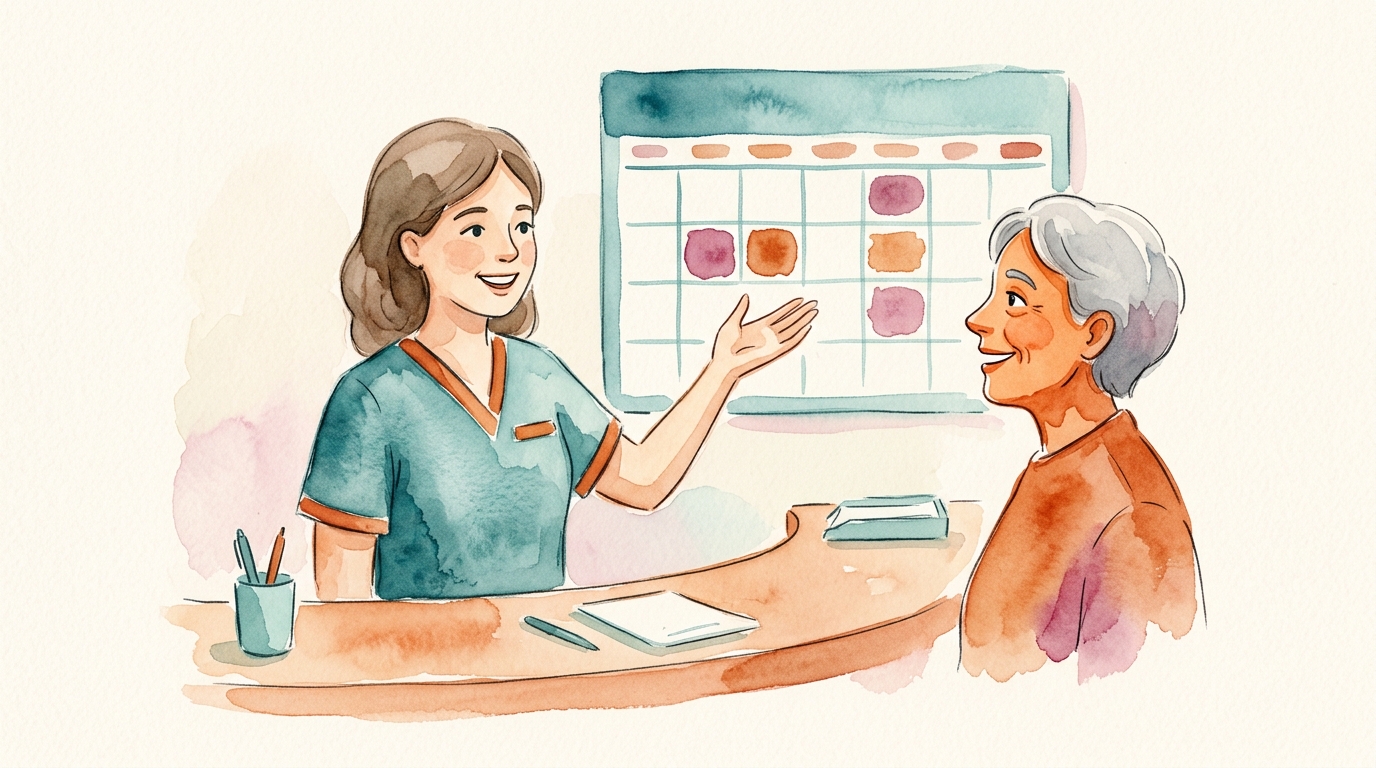
Scheduling a patient for a treatment plan that spans multiple appointments involves more than just finding open slots on the calendar. It requires a systematic approach to ensure clinical efficiency, patient compliance, and financial clarity. This guide provides practical, step-by-step instructions for your dental front office staff to master this crucial task.
Understand the Treatment Plan Before You Schedule
Before you even touch the schedule, you need a clear understanding of the proposed treatment. This information usually comes from the clinical team after the patient's examination and diagnosis. It is essential to know:
- What procedures are involved? List each procedure with its corresponding CDT code.
- How much time is allocated for each procedure? This should be provided by the dentist or hygienist.
- Are there any specific sequencing requirements? For example, does a crown prep need to happen before an impression, or does one procedure require healing time before the next?
- Are there any lab requirements or turnaround times? Factor these into your scheduling.
- What is the total estimated cost of the treatment plan? This is crucial for financial discussions.
Having this information readily available, perhaps in a standardized treatment plan form or your practice management software, makes the scheduling conversation much smoother. Your front desk team should be comfortable with these details, possibly through a robust dental front desk training program that covers common procedures and their scheduling nuances.
Verify Insurance Benefits and Patient Portion
Before presenting the treatment plan and scheduling, you must verify the patient's insurance benefits. This step is non-negotiable for multi-appointment plans, as it directly impacts the patient's financial responsibility and their willingness to proceed. For a detailed breakdown of explaining benefits, refer to "How to Explain an EOB to a Patient: A Front Desk Guide."
Key Verification Points:
- Eligibility and effective dates: Confirm the patient's coverage is active.
- Annual maximums: Determine how much of their annual maximum is remaining.
- Deductibles: Note if their deductible has been met for the year.
- Coverage percentages: Understand what percentage the insurance covers for each procedure type (e.g., preventative, basic, major).
- Limitations and exclusions: Check for any specific limitations related to the proposed treatment (e.g., frequency limits for crowns, waiting periods).
Once you have this information, accurately estimate the patient's out-of-pocket cost for the entire treatment plan. Break this down by appointment if possible. This upfront clarity helps avoid misunderstandings later, such as those discussed in "How to Handle a Patient Who Refuses to Pay Their Dental Bill."
Present the Treatment Plan and Financials
This is a critical conversation. The goal is to ensure the patient understands what treatment is needed, why it is needed, and what their financial obligation will be. This conversation should ideally happen in a private setting, free from distractions.
Script for Presenting the Treatment Plan and Financials:
"[Patient Name], Dr. [Dentist's Name] has recommended a treatment plan that involves a few appointments to address [briefly state the main issue, e.g., 'your restorative needs']. The plan includes [list main procedures, e.g., 'a crown on tooth #3 and two fillings'].
Based on your insurance, the estimated total cost for this treatment plan is [Total Cost]. Your insurance is estimated to cover [Insurance Coverage Amount], leaving an estimated patient portion of [Patient Portion Amount].
We typically collect the patient portion for each appointment at the time of service. For your first appointment, which will involve [first procedure], your estimated portion will be [First Appointment Portion]. Would you like to review the breakdown of these costs?"
Offer payment options if available, such as payment plans or third-party financing. Refer to "How to Collect Patient Payments Upfront (and What to Say)" for more guidance on this.
Strategic Scheduling: Balancing Efficiency and Patient Needs
Now that the patient understands the plan and financials, it's time to schedule. This requires a strategic approach to maximize clinical time while accommodating the patient's availability.
Considerations for Multi-Appointment Scheduling:
- Clinical Sequencing: Adhere strictly to the order of procedures specified by the clinical team.
- Appointment Length: Block out the correct amount of time for each procedure, including setup and cleanup.
- Provider Availability: Ensure the correct provider (dentist, hygienist, specialist) is available for each step.
- Lab Turnaround: If lab work is involved, ensure sufficient time is allowed between appointments for the lab to complete its work and for shipping.
- Patient Availability: Ask the patient about their preferred days and times. Offer a few options rather than just one.
- Optimal Scheduling Blocks: Try to group appointments for the same patient to minimize their travel and maximize your schedule's efficiency. For example, if two short procedures can be done back-to-back, consider scheduling them in one longer appointment.
- Future Cancellations: Be prepared for the possibility of cancellations. Having a robust system for filling same-day dental cancellations can minimize disruption.
Checklist for Scheduling Multi-Appointment Treatment:
- Review the complete treatment plan with the patient.
- Confirm estimated patient portion for each appointment.
- Discuss and agree on payment arrangements.
- Identify all required appointments and their estimated durations.
- Note any specific clinical sequencing or lab requirements.
- Check provider availability for all necessary appointments.
- Offer the patient 2-3 scheduling options for the first appointment.
- Once the first appointment is set, proactively schedule subsequent appointments.
- Confirm all scheduled appointments with the patient verbally.
- Send appointment reminders (text, email, or call) for all scheduled visits.
- Document all scheduled appointments and financial agreements in the patient's chart and practice management software.
Proactive Communication and Follow-Up
Once the appointments are scheduled, the work isn't over. Proactive communication is key to ensuring the patient shows up and completes their treatment.
- Confirmation Calls/Texts/Emails: Send reminders well in advance of each appointment. Many practice management systems can automate this. If your office still experiences issues like why dental offices miss calls, consider optimizing your communication strategy.
- Address Concerns: Encourage patients to call with any questions or concerns about their upcoming appointments or the treatment plan.
- Rescheduling: If a patient needs to reschedule, do so promptly and ensure the new dates still adhere to clinical sequencing. Document the changes thoroughly.
- Follow-up on Missed Appointments: If a patient misses an appointment, follow up immediately. Understand the reason and work to reschedule them as soon as possible to keep their treatment on track. Sometimes, a patient reactivation strategy is needed to bring them back into care.
Leverage Technology for Efficiency
Modern dental practices rely on technology to streamline these complex processes. Your practice management software is the foundation, but other tools can enhance efficiency.
- Integrated Systems: Look for solutions that integrate seamlessly with your existing practice management system rather than disparate point solutions. An AI platform vs. point solutions can make a significant difference in workflow efficiency.
- Automated Reminders: Utilize automated systems for appointment confirmations and reminders. This frees up your front desk team for more complex tasks.
- Digital Treatment Plans: Presenting treatment plans digitally can enhance patient understanding and acceptance.
- Knowledge Management Platforms: A centralized knowledge base, like Saige, can house all your SOPs for scheduling, insurance verification, and patient communication scripts. This ensures consistency, especially during dental front desk onboarding, and helps answer common dental front desk questions quickly.
Training Your Team for Success
Consistent and thorough training is paramount for your front office team to effectively handle multi-appointment scheduling. This includes not just how to use the software, but also how to communicate effectively with patients about complex treatment plans and financial obligations. For more on this, review "Why Dental Front Desk Training Keeps Breaking Down (and How to Fix It)" and "The New-Hire's First Week: A Realistic Dental Front Desk Onboarding Plan."
Develop clear dental office SOPs for each step of the scheduling process, from initial patient contact to follow-up. Regularly review these SOPs and provide ongoing training to ensure your team is confident and capable. A dental front desk training checklist can be a valuable tool for ensuring new hires are ready to fly solo.
By implementing these structured steps and leveraging the right tools, your dental practice can significantly improve patient acceptance of treatment plans, reduce missed appointments, and enhance overall operational efficiency. This leads to better patient outcomes and a healthier practice.
Related articles

How to Explain a Dental Claim Denial to a Patient
A dental claim denial can be confusing and frustrating for patients. This article provides front office staff with clear, practical steps and scripts to explain denials effectively, maintain patient trust, and manage financial expectations.
October 12, 2026 · 9 min read

How to Schedule a Patient Who Needs a Periodontal Maintenance Appointment
Scheduling periodontal maintenance appointments requires a specific approach that differs from routine hygiene. This guide provides actionable steps for front office staff to manage these appointments efficiently, from verification to communication.
October 5, 2026 · 8 min read

How to Schedule a Patient Who Needs a Referral to a Specialist
Referring a patient to a dental specialist requires a clear process to ensure they receive timely care and understand their financial responsibilities. This guide provides actionable steps for front office staff to manage specialist referrals efficiently.
September 28, 2026 · 9 min read